
microsoft-resnet-18
 Hugging Face
ResNet model trained on imagenet-1k. It was introduced in the paper Deep Residual Learning for Image Recognition and first released in this repository .
Disclaimer: The team releasing ResNet did not write a model card for this model so this model card has been written by the Hugging Face team.
Model description
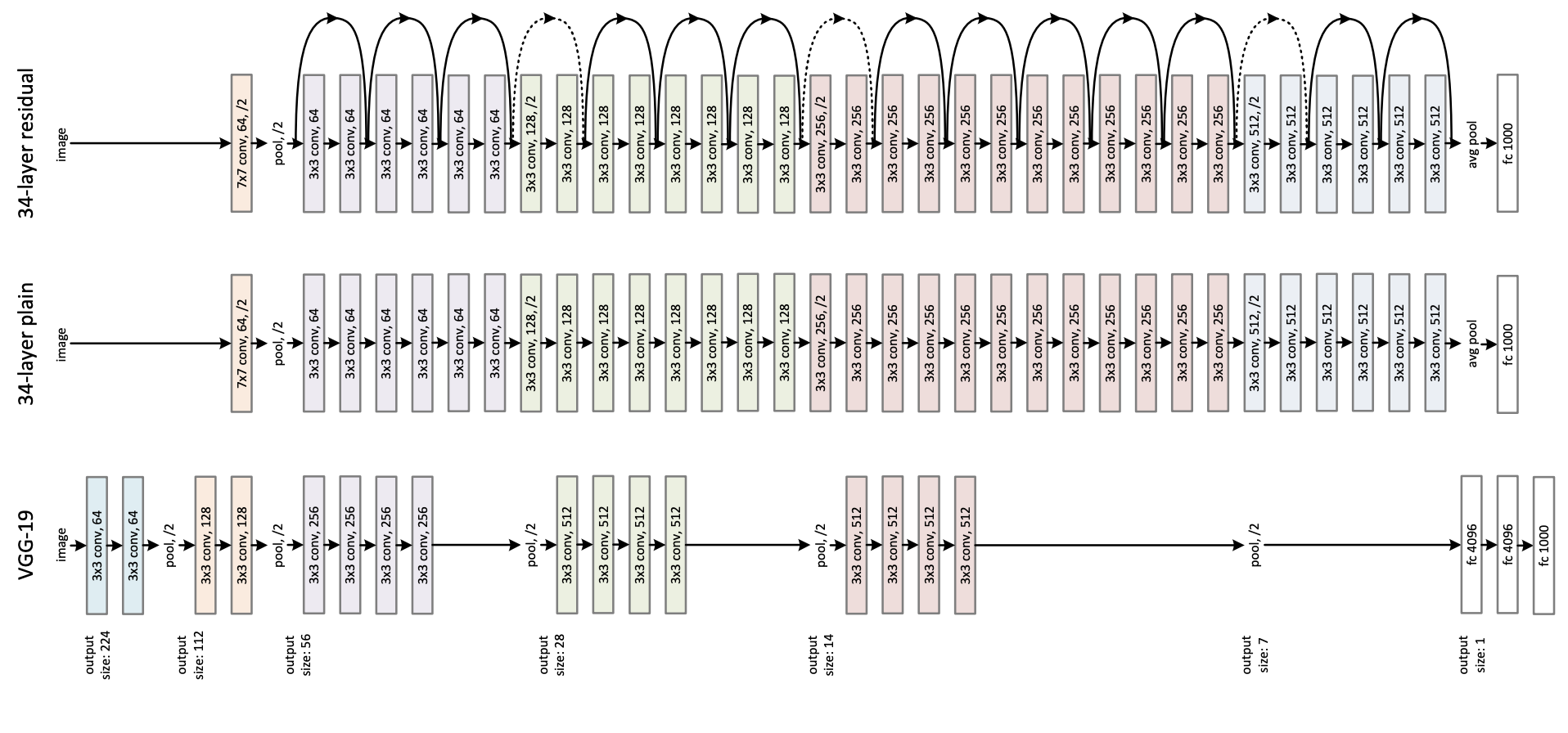
ResNet introduced residual connections, they allow to train networks with an unseen number of layers (up to 1000). ResNet won the 2015 ILSVRC & COCO competition, one important milestone in deep computer vision.
Intended uses & limitations
You can use the raw model for image classification. See the model hub to look for
fine-tuned versions on a task that interests you.
How to use
Here is how to use this model:
>>> from transformers import AutoImageProcessor, AutoModelForImageClassification
>>> import torch
>>> from datasets import load_dataset

>>> dataset = load_dataset("huggingface/cats-image")
>>> image = dataset["test"]["image"][0]

>>> image_processor = AutoImageProcessor.from_pretrained("microsoft/resnet-18")
>>> model = AutoModelForImageClassification.from_pretrained("microsoft/resnet-18")

>>> inputs = image_processor(image, return_tensors="pt")

>>> with torch.no_grad():
...     logits = model(**inputs).logits

>>> # model predicts one of the 1000 ImageNet classes
>>> predicted_label = logits.argmax(-1).item()
>>> print(model.config.id2label[predicted_label])
tiger cat
For more code examples, we refer to the documentation .
microsoft/resnet-18 powered by Hugging Face Inference Toolkit
Send Request
You can use cURL or any REST Client to send a request to the AzureML endpoint with your AzureML token.
curl <AZUREML_ENDPOINT_URL> \
    -X POST \
    -H "Authorization: Bearer <AZUREML_TOKEN>" \
    -H "Content-Type: image/jpeg" \
    --data-binary @"image.jpg"
Supported Parameters
- inputs (string): The input image data as a base64-encoded string. If no parameters are provided, you can also provide the image data as a raw bytes payload.
- parameters (object):
- function_to_apply (enum): Possible values: sigmoid, softmax, none.
- top_k (integer): When specified, limits the output to the top K most probable classes.
Check the full API Specification at the Hugging Face Inference documentation .
